The Buzz: Phil’s Sweatband Goes Coastal at Lindy Bout X

Tales from Lindy Bout X

March 31 – April 3, 2016 (Vancouver, BC)
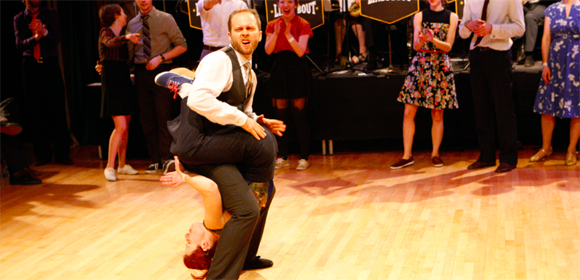
Go Sweatbands!!! With only two hours in Vancouver to practise the routine as a team, our final Lindy Bout Team Division performance looks awesome!

Hailing from Edmonton, Seattle, Vancouver and Toronto, thanks a bunch to the rest of the Sweatbands crew: Julie Kiraly, John Marian, Lindsay Giese, Claudia Nobauer, Brett Nakashima, Vicky Dance, Darryl Glen, Heather Moore, Lee Broxson

A very special thanks to Julie Kiraly for choreographing the routine with me and the rest of team who also contributed to its badassery. Wish we could practise another two hours and perform it again…


The Interregional Jack & Jill is one of the zaniest and best competitions in the greater world of Lindy Hop. As my favourite competition at Lindy Bout in Vancouver, I get nervous every year about whether I’ll make the finals. It’s so good!! This year I was paired with one of my favourite Lindy Bouters and fellow silly dance enthusiast, Claudia NoBauer! The competition begins like most Lindy Hop Jack & Jills, but then the real fun begins…

 Phil_Bees-Knees-Dance-Teacher_sm

PHIL BOURASSA
THE BUZZ BLOGGER

The Buzz: Bees Generate Buzz at Ottawa’s O-Town Showdown

(Photo credit: Bruno Avard)

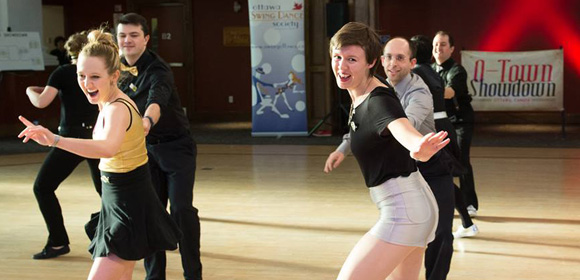
Wow! Toronto absolutely swarmed this weekend’s O-Town Showdown! We’re burstin’ with Bee Pride for not only our own amazing dancers, but for the entire Toronto crew that made the treck up to our nation’s capital.

Once again, dancers from the 6ix dominated the Prop & Jill with a huge Toronto presence in the finals, including local dancers Anne Dorward and Hannah Bild-Enkin (with 1st & 3rd places claimed by our own BKD teachers Jasper Palfree and Phil Bourassa respectively, both of whom also earned spots in the finals of the Solo Jazz division).

Our competitive troupe The Killer Diller Bees laid down an impressive performance in the Team Showcase, while other Toronto dancers showed off their choreography skills with a seemingly-endless number of entries in the Short Showcase division (3rd place won by Killer Diller Bee Jessica David with the aforementioned Jasper Palfree).

Jasper and fellow BKD teacher Shannon both earned spots in the Showdown Jack & Jill finals (with top spot claimed by honourary-Bee Julie Kiraly of Edmonton and Toronto’s own Luis Arredondo); with Phil, Shannon and Anne also strutting their stuff in the role-reversal Jill & Jack finals.

For full results, check out http://www.otownshowdown.com/g/results/#2016

Toronto, you sure know how to bring the competitive heat! Congrats to all the participants, finalists, and award winners both from our fair city and beyond. And of course, a huge thank you to the Ottawa swing dance scene for being such wonderful hosts at this annual favourite. We’ll certainly be back next year!

The Buzz: Birthday Jams – 8 Tips for Maximum Fun

After nearly ten years of Lindy Hop, I’ve participated in my fair share of birthday jams, both as a “jam-er” and a “jam-ee”. Here are my top eight tips for making birthday jams more fun, especially for the dancer being jammed:

1. Set the stage.

Create a fun and exciting atmosphere for the jam-ee! How? First, you have to get up (and encourage everyone else to do the same) and make a semi-circle around the jam-ee. It’s a bit of a let-down when people stay sitting and chat with their friends while a birthday jam is happening so don’t be that guy (or gal). Then, make the semi-circle nice and tight; give the dancers enough room to dance but make it feel cozy and close. Clap your hands off! Smile! Have fun!

2. Include the band (or DJ).

They’re making the music that inspires us to dance, and so they should be just as much a part of the jam as you and I. Be sure to leave a space (hence, the semi-circle) so the band or DJ can see the jam too!

3. Get in there!

If it’s your first time, it can be nerve wracking. How do I steal? Everyone is watching! What do I lead? What if I can’t follow what they lead?  Don’t worry. Watch how others steal in and then steal their ideas (see what I did there). Lead what you know and don’t overcomplicate it. Keep it simple if you’re nervous. Try to relax and follow as best you can, but remember it’s ultimately about having fun and making sure the jam-ee is having fun!

4. Say happy birthday to the jam-ee.

It’s a nice touch, and after all, that’s why we’re having the jam, no?

5. Take your turn, and let others take theirs too.

You’re excited. You can’t wait to steal in. We get it. Birthday jams are fun!  But unwritten (until now?) birthday jam etiquette says we should let each jam-er have at least a full phrase of the music to dance with the jam-ee so don’t jump in too soon!  If you’re worried you won’t get in there, make it known that you’re planning to jump in next by making your way in to the circle and looking for the opportunity to make your move and then strike when the phrase is ending!

6. Remember who the jam is for.

Is it your birthday? No? Then this may not be the time to show off your cool new flashy moves that draw all the attention to you. Take this opportunity to really make the jam-ee shine.

7. For the leaders: take it easy sometimes too.

As a follower, being jammed means you typically end up doing a lot of swing outs. A lot. If the song is a bit on the faster side this can get tiring, so if you’re a leader and you’re about to jump in to a jam pay attention to what the last 2 or 3 leaders led and if it was a bunch of swing outs or variations of swing outs maybe change it up and give the follower a bit of a breather with some moves that are a little more chill.

8. Have fun!

Have I said this already? I’ll say it again, just in case. Have fun and make it fun for the jam-ee!

Birthday jams are one of the many wonderful things that I love about Lindy Hop and the swing dance community. How about you? Have you had your first birthday jam yet? Got any tips of your own?

Heather O’Shea
The Buzz Blogger


The Buzz: My Choreo Story(o)

How a Break from Improvising Saved My Social Dancing

As choreo season draws upon us I can’t help but feel a bit charged with nostalgia (something I’m not generally prone to). Choreographies have made my most memorable moments at Bees’ Knees Dance, both as a student and a teacher. And memory is the key word here, because learning a choreography is all about turning theory, moves, and feel into a clean performance that is completely committed to your mind-grapes. It’s fun, it’s intense, and it’s ironically the thing that really took my social dancing to the next level.

In normal classes we approach moves with a lot of detail and information. We talk about the lead and follow, we talk about transitions, and we even temporarily put them in little choreographies (sequences) to practice them in the midst of other moves we’ve learned. For most this is a great way to fully understand how to perform and incorporate a new piece of swing lexicon into their dancing, but for others this knowledge and understanding is only temporary (oh, hey). Let me be real for a second. I don’t remember MOST of the moves I’ve ever learned. It’s no one’s fault. There’s so much to know and to be honest, it’s mostly the fault of how my brain works. Moves that aren’t currently on my radar of “stuff I’m working on” generally lie forgotten on the sprung floor of my mind.

But then, there’s Choreo class. HELL. YEAH. If there’s one thing that knows how to print to my long term memory it’s repetition. Even if you’re someone who really retains information from all classes you’ve taken (EXPLAIN ME YOUR SORCERY, WIZARD), repetition is still the holy grail of building dance vocabulary. And choreo is THE venue for it. You have the camaraderie and pressure of a performance with fellow dancers, and your only option is to get. it. done. No matter what.

My first choreo ever was a really fun medium-fast Lindy Hop with Arthur and Heather. We did it to “I Like Pie, I Like Cake” (before it got supa’ hot in the global scene within the next couple of years) and for the first time I was dancing with real confidence. The pressure of thinking up the next move was gone, and with it the pressure of being musical (I’m a musician, the fear of NOT being musical was actually anxiety inducing). It was all right there, laid out for us, and it was AWEsome. We used moves I knew, moves I didn’t know, and a SLEW of transitions, both common and unorthodox (including an 8 count entry into tandem charleston that I still use today). We also formed a real team of dancers, people who relied on each other to make us all look good. We started holding extra practice sessions at each other’s houses and really started to enjoy each other as company instead of just classmates.

At the end of three months I had had so much fun approaching Lindy Hop in this new way. I had committed a ton of new moves to memory, made a bunch of new friends, had gotten to practice swing-outs faster than I ever had until it was easy (easyish), AND I was even more appreciative of my normal classes. Normal classes made so much sense now. In them you really work with WHY a move is what it is and how it should feel, how it should be lead and followed. In a choreo class you don’t always get the time to ruminate on the theory of a move. Choreography classes are built to cram moves in to you like an overstuffed suitcase going on a swing voyage (this year we’re going to Harlem!), but in normal classes you stay on them and pick at them until they really make sense.

In tandem (whomp whomp), these two styles give you the theory and vocabulary for great dancing. And something a little more I think, because now I can’t do that tandem transition without my sense-memory going back to that part of “I Like Pie, I Like Cake”, and remembering the room, the feeling, and the energy of that class. And that’s a voyage I enjoy taking.

Got a fun story from one of YOUR choreo classes? Let us know in the comments below!
.

JAMES EVERETT
THE BUZZ BLOGGER


The Buzz: Dancing Outside Your Scene

You may have it down pat at the venues you frequent: you know the other dancers, you know the bands, you know the floor. It gets to be so easy after a while! You go out, meet your friends and dance your face off. You know pretty much what to expect (aside from surprise pecking), and what to expect is fun. But what happens when you venture off the dance floors you know and love?

Whether you’re travelling to attend a dance event, or just travelling and hoping to dance, there are a few challenges you might face when dancing outside your scene. They’re easy to overcome though, and who knows? Before you know it you could be dancing your way across the globe!

.
Find Someplace to Dance

Thanks to the power of the intertubes you can do a lot of research on what’s happening at your destination before you get there. Search for groups or swing schools in the city you’re going, check out the venues and the bands, try your darnedest to figure out what the floor’s like. Facebook’s a great help, both for finding upcoming events and making connections with other dancers.

.
The Right Shoe for Every Floor… Is All The Shoes

If you’re new to dance travel, you’ll soon see why Lindy Hoppers pack so many shoes. Bring a couple pairs so you’ll be set whether the floor is sticky or slippery. If you like to dance in heels you might bring a couple of options there too. Oh, and probably an option in case the floor’s in really bad shape and you don’t want to ruin your good shoes. And the pair that goes with those pants. You should probably just bring all your shoes. 😉

.
I Ain’t Got Nobody

Let’s dance! Yeah! It’s just… what if you don’t know anybody? How do you get out there? If you don’t know very many people it can be a little trickier to get on the floor than you’re used to. Instead of grabbing your friend or classmate, you may have to go in cold and ask someone new. Don’t worry – even the most confident among us can get a little shy in these situations. This isn’t all that bad though… I like to remind myself that I’m about to renew my faith in how friendly and welcoming Lindy Hoppers are. And that’s exactly what happens 99% of the time!

.
Voulez-vous dancer? Vuoi ballare? Would you like to dance?

It’s pretty common that many scenes have fewer Leaders than Followers, so while I’m going to speak right to the Followers here, this definitely applies to both dance roles.

I’ve heard from many Followers throughout the years that they’re too uncomfortable asking strangers to dance and prefer to be asked, but that makes it difficult to dance anywhere when they travel. I can’t stress it enough: this is the time to step out of your comfort zone! Why not give it a try?

There are a couple things to keep in mind here:

  1. Look for someone standing around the dance floor;
  2. Look for someone whose body language says they’re ready to dance (e.g. they’re tapping their feet, moving along to the music, not otherwise in a conversation…);
  3. Lindy Hoppers are generally super friendly folks and it would be pretty rare for someone to turn down a dance if the above conditions are met!

.
.
Filling Up Your Dance Card

Hot tip: Ask for introductions! After a dance, ask your partner who you should dance with. They’ll introduce you to their friends and your dance card will fill right up.

Another strategy I use a lot: once you’ve had a dance and if you want another, stay on the floor after the song ends and you thank your partner instead of making a “bee-line” off to the side. Everyone’s milling around after the song ends, looking for a partner. It’s the perfect time to find your next dance!

.
Getting Inspired

My favourite thing about visiting a new dance scene is noticing the trends. What music are they most excited about? What’s the excellent Follower styling? What is every Leader leading? For example: London is super into partnered JUMPING! right now and Parisian Leaders are leading side-by-side chugs like it’s their job.

Who couldn’t use a little excitement outside of what’s tried and true? Go forth, get inspired! Just make sure you bring that inspiration back for the rest of us so this dance we love keeps growing!

.


REESA DEL DUCA
THE BUZZ BLOGGER


The Buzz: Tips for Growing Your Lindy Hop

 – 

My Own Personal Journey

Howdy folks!

Firstly, just a quick note that my tips and methodology on how I grew as a Lindy Hopper are what worked for me. You might find they work for you a lot, a little, or not at all. I only hope the following words can be of some value to you in your own personal journey.

I took my first Lindy Hop class January 14, 2007. I remember the exact date because I was immediately obsessed. I had explored other dance forms growing up but by the end of my first class in Melbourne Australia, I knew Lindy Hop would be my passion and hobby for the rest of my life. Once my visa was up 5.5 months later I changed my world travel plans and moved back to Canada where I could stay grounded and throw myself entirely at this amazing dance.


Tip #1: Take as many classes as you can (afford)

Although I hadn’t yet moved to Toronto, I commuted there twice a week from Burlington to attend classes. It was a bit of a hassle but worth it. Classes are an important source of new material that you can bring with you when you go out social dancing.

Tip #2: Social dance as much as possible

This is probably the most important tip, and the easiest. Social dancing is the whole purpose of taking lessons, as well as the root of where this dance originates. If you are newer to the scene and are intimidated by the more experienced dancers, DON’T BE. The Lindy Hop community as a whole is very inclusive and friendly, but I believe this is especially the case in Toronto (no bias of course). Never hesitate to ask anyone to dance, including me ☺ Lindy Hop social dancing is a shared experience where you are inspired by both your partner and the music. As long as we’re both trying to have a good time, it’ll be a lot of fun regardless of your level of experience. Dancing with a brand new dancer who is engaged and having fun is one hundred times better than an “expert” who isn’t. It’s just like any verbal conversation. It only works when both people are listening and contributing.

Tip #3: Bring a cheat sheet to the dance

The social dance floor presents a great opportunity to practice what you learned in class, though not at the expense of the conversation with your partner. I used to bring a cheat sheet to dances that listed a few brief points on what I was currently working on. I would take a quick peek, pick one thing, and focus on that for some or all of the evening. I would have it as a thought in the back of my mind, throw it out there once in a while and then forget about it. For more general things such as posture or what your arm is doing, you can focus on them a little more often. Again, have fun and don’t let your training happen at the expense of the person you’re dancing with. The one possible exception where you could practice a little more during a dance would be if your partner was someone you practice with regularly and they’re okay with it.

Tip #4: Find a dance partner and/or practice group

I found it difficult to find a steady partner early on but got lucky with some great ones. Nowadays Toronto’s scene has a greater number of eager dancers you can hopefully connect with. The most obvious place to meet and inquire about partnering with someone is in your regular classes. If you have great social dancing chemistry that’s also a good sign. If you’re working with someone in a performance class or troupe, you might try to extend that working relationship outside the classroom. Although regular classes offer a great place to get expert material and occasional personal feedback from your experienced instructor, working with a partner has the added benefit of constant and focused constructive feedback and the opportunity to cater the material to you and your partner’s needs. Just make sure you are both considerate of each other’s interests when utilizing your practice time and always make sure your feedback is constructive. When something isn’t going quite right with what you’re working on, be as specific as you can about the problem but without assigning blame, i.e. “I’m not feeling the stretch at the end of our Swingout”. Because you often don’t know what the issue is or who, if not both of you, is contributing to it, the best approach is to list the possible causes from the perspective of both roles. Even if you think you’re doing everything right and know exactly what your partner is doing wrong, being balanced at the onset is a more diplomatic approach and allows each person to reach their own conclusions. You’ll probably find that your original theory is sometimes incorrect.

Most people are sensitive to criticism, especially when they are trying really hard to work on something they care so much about. If you’re going to offer your opinion, always follow up by asking for theirs. Nobody is an absolute expert and both of your opinions always matter.

I find this approach to be safe, considerate, and a benefit to the long-term health of your relationship.

Tip #5: Keep track of your progress and accomplishments

When I first started practicing it was in my parents’ carpeted basement, working on jazz steps from YouTube videos I burnt onto blank DVDs. I started a Word document with the title “Solo Jazz” and began listing the moves regardless of whether I knew the actual name. If I wanted to confirm the name or had a question on how to execute the move, I’d ask my instructor just before or after class.

When I started working with partners, I extended the Word document to include other categories and greater detail, i.e. Tandem Charleston, Swingout Variations, Personal Stylings, Sugar Pushes, etc. For each move/combo/style/variation/etc., I would include a name (if possible), exact title of the YouTube video and a timestamp of where the action takes place. I would then include a brief description of how I thought it was being executed from a Leader’s perspective. When I showed up for practice I had the document and videos ready for reference on my laptop or tablet. When I stopped adding to the document about 3 years ago and began writing custom lists for each person I was working with, I was up to 63 pages. It was pretty big.

Here’s a couple examples of how I used to catalogue what I was working on. Please keep in mind that these are several years old and reflect the dancer I was at the time ☺

(from the “Texas Tommy” section of my Word doc.)

[0:40 – 2009 03 09 Heather   Davis Thurber Lindy Level 3 Week 22] As soon as you pass her hand off on 5, grab it with your RH on 6, keeping your LH on her lower back. Keep the Follower anchored while you continue to rotate cw.  At about 7, bring her RA to behind your back.  At about 1, prep her hips cw and lead a ccw turn in the direction of stretch to your left. Try it!

(from the “Swingout Moves and Variations” section)

[0:40 – Nick & Carla au PSF 2008] Build tension by 6, lead a stretch away on 7 and lead her to jump towards you on 8.  On 1, you’re both landing with forward momentum as your RH connects with her left shoulder. Lead her into an outside turn as she continues to move in your direction.  As she turns, turn with her for about another 90° so that you both land facing opposite to your starting positions.

    • Variation: Turn an extra 180⁰ at the end so that you land back to front.  Now with a bit of a downward prep on the landing, jump up while turning and leading her 180° ccw into Tandem Charleston. [5:20 – Camp Jitterbug 2008 Lindy Hop Couples Finals] Practice

.
The Practice meant that I still needed to work on it with my partner during practice time. Try it! meant that it was ready for the dance floor.

Tip #6: Use other dancers as a source of inspiration

At this point in my dancing I’m more focused on coming up with original ideas without videos but will sometimes watch videos of the world’s top dancers for inspiration. Regardless of how long you’ve been dancing, try to assimilate what you get from other dancers as much as possible, rather than just copying things exactly.

There’s nothing wrong with “stealing” from other dancers. The great Frankie Manning pointed out that Savoy dancers did this all the time. The key is to take their move and make it your own through style, variation, addition or a combination of the three. When I first started practicing with a partner I almost never chose something to work on simply because it looked cool or flashy. I always picked something that had a movement, style, or technique that was new to me. My theory at the beginning was that if I focused on improving all of these things, I could eventually move in every way and lead anything. Of course, no matter how good you think you are there is always something to learn. This mentality, not to mention truth, is what will drive you to improve and create for the rest of your dancing life.

If you decide to use a practice methodology similar to what was mentioned above, the one piece of advice I would give is to remember that this dance is an art form, allowing you to express yourself with your own unique creativity. Begin by imitating and breaking things down but then quickly move to make the new material your own and allow it to evolve. Your dancing should be an expression of who you are and not a robotic regurgitation of what you saw on YouTube or did in practice.

Tip #7: Film Yourself

Watching yourself dance is an extremely useful thing to do. Set up a tripod or ask a friend to help. For most of us we’re much better dancers in your own heads than what is actually displayed on the dance floor. Every time I check in and watch myself dance, I see something I want to improve upon. Having your dance partner(s) critique your video can also be beneficial. Video critiquing is a great way to measure your progress, and over time you will gain a keener eye for what you’re seeing .

Tip #8: Travel

All the best dancers I’ve known are people who travel to outside dance events. There are some fantastic instructors here in Toronto and some great dancers to social dance with, however we only represent a fraction of the greater Lindy Hop community. Taking outside workshops exposes you to new teaching and learning approaches, as well as unique styles and dance moves. One instructor’s perspectives and approach to fundamental concepts might connect with you in ways you hadn’t thought of before.

Dance events typically have amazing music to inspire you, push your creativity to places you’ve never been, and can result in some of the best dances you’ve ever had. One of the best things about travelling is all the friends you’ll make along the way. The greater Lindy Hop community is massive and it’s pretty cool when you have friends from all over the world. Not only is the social dancing fun but your partners will expose you to new styles, moves, variations, etc.

There are 3 main categories of events: 1) Exchanges, which are all about social dancing 2) workshops and 3) competitions. Some events are a combination of these three. In my earlier years I focused more on workshop events because I was a sponge for knowledge. Your days are full of classes and your evenings are filled with social dancing. I dabbled in competition events but didn’t go to many until I had been dancing for about 4 years. Competition has never been a big focus for me. I’m more of a social dancer at heart. I compete a handful of times per year because it presents a different challenge and the whole process can be pretty exciting when it isn’t too serious. You might feel different about it depending on your goals. If you are an aspiring competitor, keep in mind that the better social dancer you are, the better a competitor you will be.

If you’re interested in competing, I also recommend performing. Do it with a partner and/or with a troupe. In some ways competing is performing, in that you are presenting yourself to an audience. You have to consider connecting with them in addition to your partner.

Tip #9: Explore other dance forms

To present a new challenge and refine some of my fundamental dance skills, I started taking ballet classes. I’ve also dipped my toes in Hip Hop and Breakdancing. Training in other forms of dance can improve body awareness, movement, and overall mechanics. In the modern Swing era you can see many examples of dancers incorporating other forms of dance into their Lindy Hop. I’ve seen hip hop, breakdancing, locking, modern dance, tap, tango, etc. Lindy Hop is a dance of improvisation where there is some freedom to incorporate ideas from other dance forms. The key in most cases is to do it while having it still look like Lindy Hop.


Well, I think I’ll leave it here for now. I could easily go on forever as most of my friends would agree. If you have any questions, please don’t hesitate to ask me in person. Lindy Hop and the culture surrounding it are easily the greatest things that ever happened to me. If you’re new to this dance I’m very excited for you and the adventure still ahead. It’s going to be an awesome ride. I now leave you with a couple of my favourite quotes from the great Frankie Manning.
.

“When you are dancing with your partner, for that two and a half minutes, you are in love with each other. You’re corresponding with each other by the moves that you make. It’s a love affair, between you and your partner and the music.
– Frankie Manning

I think the dance is wonderful, to me it’s a partner dance, good exercise, with a partner, it’s a joyful dance. I usually tell people, I never see a lindy hopper who is not smiling. – Frankie Manning

Question for Frankie: Frankie, these days you are The Man … how do you feel …
Frankie: I really don’t know what it’s like. I don’t feel any different from anyone else. I’m just a dancer who loves to dance and loves people. I can’t tell you. People ask me, “How does it feel to be a legend?” I feel like I feel. I don’t feel like I’m a legend, I feel like Frankie.

.

 Phil_Bees-Knees-Dance-Teacher_sm

PHIL BOURASSA
THE BUZZ BLOGGER

The Buzz: Can I get Frim Fram Sauce on That?

Anyone who knows me knows that I love listening to swingin’ jazz, I love to swing dance, and I love to cook delicious vegetarian food.

I’m in good company; there are lots of vegetarian and vegan Lindy Hoppers here in Toronto as well as abroad. In fact, quite a few of the Bee Keepers (a.k.a teachers) here at Bees’ Knees Dance are vegetarian or vegan, including our own Shannon Refvik, Reesa Del Duca, Jasper Palfree, and Kris Light.

A group of us went down to New Orleans for the Ultimate Lindy Hop Showdown in 2013 and even as vegetarians in a fried-chicken-and-seafood-gumbo kind of town, we were impressed and inspired by the local cuisine.

Taking inspiration from a particular swing song we like to use in class, here’s a recipe that can be made vegan or vegetarian and reminds me of New Orleans. Do you know what it means to miss New Orleans?


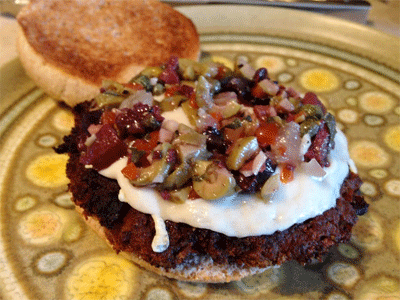
Seitan “Alligator Meat” Muffaletta (sandwich)

.

Cajun “Alligator” Seitan

(can be made in advance, just store it in the simmering liquid in the fridge until ready to use)

1 1/4 cup Vital Wheat Gluten (such as Bob’s Red Mill)
3 tbsp Chickpea (Garbanzo Bean) Flour (such as Bob’s Red Mill)
2 cloves garlic, grated fine (use a microplane or the fine side of a box grater)
1 tsp paprika
½ tsp dried oregano
½ tsp black pepper
½ tsp dry thyme
¼ tsp cayenne pepper
½ cup cold vegetable broth
¼ cup soy sauce
1 tbsp olive oil
2 tbsp fresh lemon juice

Simmering Broth:

4 cups vegetable broth
4 cups water
¼ cup soy sauce

Fill a large stock pot with the broth, water, and soy sauce, cover and bring to a boil.

In the meantime, in a large bowl, mix together the vital wheat gluten, chickpea flour, garlic, and spices. Combine the vegetable broth, soy sauce, olive oil, and lemon juice. Add the wet ingredients to the dry ingredients and combine with a wooden spoon. Knead with your hands for a few minutes until the mixture is stretchy. Cut into four equal pieces and shape into cutlets.

Once the liquid is boiling, lower the heat to simmer and add the “alligator” cutlets. Partially cover the pot and simmer for 45 minutes, turning the cutlets over occasionally. Take off the lid, turn the heat off, and let sit for 15 minutes. Cut each cutlet in half, on the diagonal.

Breading:

1 cup of panko breadcrumbs
1 tsp garlic powder
1 tsp paprika
1 tsp dry oregano
1 tsp dry thyme
½ tsp black pepper
½ tsp salt
oil for frying

Mix all the breading ingredients together in a wide bowl. Take the cutlets, cooled but still wet from the simmering broth, and coat them in the breading mixture. Fry in hot oil, four halves at a time so you don’t crowd the pan, for two minutes on each side, then two minutes more on each side.  Set on a paper towel to absorb any excess oil.


Olive Salad

Purchase in New Orleans or make your own in advance:

¾ cup green olives (pimento or garlic-stuffed, if possible), drained
¼ cup pitted Kalamata olives, drained
1 tbsp capers, drained
3 – 4 pickled cocktail onions,drained
1-2 cloves of garlic, minced
2 tbsp olive oil
1 tbsp white wine vinegar
1 tbsp fresh (if you can get it) or 3/4 tbsp dry oregano, chopped
1 tsp celery seeds
dash of salt and pepper

Chop the olives and onions and mix with the capers, oregano, celery seeds, salt & pepper, vinegar and olive oil and pack into a jar. Let marinate in the fridge at least 24 hours.


BLOG_14Dec2_01Make the Muffaletta

Keiser bun or fresh Italian bread

Two Alligator Seitan cutlet halves

Mozzarella Slices

Provolone Slices
(use regular cheese or vegan Daiya Mozzarella and Provolone slices)

Olive Salad

Mayo
(or vegan mayo such as Veganaise, Earth Balance, or Just Mayo)

Optional toppings: lettuce, tomato, onion

Place the hot seitan cutlets on the bottom half of the bread and top with the cheese slices. Broil them on high in the oven with the tops of the bread to toast for about 60 seconds or until the cheese melts. Remove from the oven, add the olive salad, spread some mayo on the toasted top, add toppings, place the top on the sandwich, and enjoy.


Heather O’Shea
The Buzz Blogger

The Buzz: An Introvert’s Guide to de-Wallflowering

I Can Has Lindy Hopz?

It was almost exactly a year ago this weekend that I finally faced my fears and went for it… I asked a stranger to dance.

A bit of backstory perhaps. Like many swing dancers, I’m an introvert. A shy introvert. Big time. I can easily tuck that behind a blanket of outgoing perkiness but at my core, people are scary. So the idea of walking up to someone and willingly putting myself in a position of judgment where the other had the choice to either accept my offer graciously or storm off cackling loudly at the very audacity of spending a single moment in my presence… well, clearly I’d built the latter up to a terrifying if not ludicrous level.

So I didn’t ask. Ever. Oh sure, if I was leaving the dance floor and happened to catch the eye of one of my good pals I could awkwardly raise an eyebrow and strike a dork-pose until they shuffled over to dance… but to actually walk up to someone and ask? Oh hells no. Terrifying. Stranger-Danger. I’d rather stand by the sidelines. So I did. A lot. And apparently started to get a reputation as a dance snob, even lost a couple of friends over it. It had the beginnings of becoming a real barrier to the dance funz, and gosh darn it I was frustrated.

Thankfully a year ago, at my first Steven & Virginie workshop in Rochester, a good pal grew tired of my cowering in the corner and challenged me to ask 3 people to dance that weekend. Just 3. Had to be strangers. And by golly I did it.

Since I’m sure I’m not the only swing dancer to ever suffer this affliction, I’ve decided to share what worked for me so that you too can stop being a wallflower and get out there and dance!

Dance in Someone Else’s Shoes

You know how good it feels to be asked to dance. It’s awesome, it’s flattering, it’s a possible new pal, it’s at least 3 minutes of good times in your immediate future … All kinds of good things. Now have you ever looked the asker in the eye and thought “how dare they think themselves worthy of my time and sweat!” ? Oh c’mon, of course not. If you did, you’d probably have been ostracized long ago. (I kid) So when you’re crossing the floor and summoning courage, just remember how great you’re about to make that person feel.

Target Other Wallflowers

My first self-initiated dance was with a fellow dance introvert, a well-dressed elderly gent being repeatedly passed over at the sidelines. So up I went, offered my hand, and was greeted with the warmest, most enthusiastic smile. And boy, that dance was FANTASTIC. It made the rest of the night so much more pleasant for both of us. He got to strut his stuff, thus intriguing other follows, and I got an injection of courage with which to seek out my next dance partner.

Remember the Many Reasons for Rejection

Maybe they just finished a really fast Charleston and need a breather. Maybe they stubbed a toe during that last dance. Maybe they feel too sweaty and want to change their shirt. Maybe they are concerned of their own body odor and want to escape to the loo for a pits n’ bits sink-shower. Maybe that particular song dredges up bad memories. Maybe they are feeling that pre-dance burrito about to make an unfortunate reappearance. Perhaps they’d previously promised the next dance to someone else and are frantically scanning the room for them. Notice how none of these reasons have anything to do with you? Exactly.

And finally…

If All Else Fails, There’s Always Solo Jazz

If you’re loving the song but too shy to find a dance partner, there’s no reason you can’t still dance. Rock out some Apple Jacks or a cool Boogie Drop, and in no time you’ll notice others joining you. Solo dance is contagious, like moths to flame, or flies to sidewalk-poo. If you dance it, they will come… and you’ll either end up with a Lindy Hop partner for the rest of the song, or at least someone else to Spank the Baby with.

Happy Asking!


KRIS LIGHT
THE BUZZ BLOGGER

The Buzz: Music for the (young) Lindy (grass) Hopper

One question we frequently get from level 1  students is “where can I get music good for practicing”? The easy answer is to look for swing era jazz. Jazz from the 1930s. Count Basie, Duke Ellington, Ella Fitzgerald, Jimmie Lunceford, Chick Webb. Great artists from the swing era but the library of material from these artists is vast and not all their recorded material is appropriate for dancing. A lot of the recordings are poor quality and difficult to hear. And much of it will be too fast for the Lindy Hopper.

In years gone by I used to make practice CDs and give them to students. These CDs would have a variety of tempos and consist of artists from the swing era. It could be argued that there may have been copyright infringements with this practice but I’m going claim fair use for educational purposes. Fast forward to the digital era, where physical media is less relevant.  My computer doesn’t have a CD burner so even if I wanted to make practice CDs it isn’t as straight forward as it has been in the past.  Instead, I’ve created a playlist on 8Tracks.com.

8Tracks is an internet radio station that allow users to curate playlists. I’ve put together a playlist of 12 songs that are beginner friendly. These are songs I frequently use in classes for teaching. They have a brilliant simplicity, are good quality, and are fun songs that I would social dance to anytime. The low end tempos start at the 125 bpm range for working on eight count rhythm, swingouts and fundamental Lindy Hop movement. For Charleston it’s probably best to use faster songs although Charleston in the 140 bpm range can be a  good excercise in body control. The fastest tempo in the mix is Lionel Hampton’s Flying Home which is 192 bpm.

The last song in the playlist is Jimmie Lunceford’s T’aint What You Do. This song is often used for The Shim Sham which is taught in our Jazz 1 classes. There are other Shim Sham songs but this seems to be the most commonly used song for the Shim Sham in Toronto.

You can listen to the playlist here → http://8tracks.com/luluhop/beginner-lindy-hop

Although I like the simplicity of creating and sharing an 8Tracks playlist, there are some caveats that listeners will encounter. In order to stream copyrighted music 8tracks has to comply with playback restrictions. Listeners can fast forward to next song but are not able to repeat songs. Playback is also through your computer or smartphone so some people won’t be able to play through a good sound system. What it does provide is artist information and the links to purchase in iTunes.  I recommend that people buy music they enjoy. Especially if it moves you to dance.

Discovering “new” music is part of the reason I love Lindy Hop.  I hope new Lindy Hoppers find this playlist useful and journey into the great music of the swing era.


Beginner Lindy Hop Playlist – Track info and bpm

Jump Session – Slim Gaillard and Slam Stewart – 165 bpm

You’ve Got to Walk the Chalk Line – Buddy Johnson125 – bpm

Lost in the Shuffle – Artie Shaw – 146 bpm

Don’t be That Way – Lionel Hampton – 136 bpm

Drop me Off in Harlem – Ella Fitzgerald – 120 bpm

That’s Rhythm – Rex Stewart – 147 bpm

Alligator Meat – Joe Swift and the Johnny Otis Band – 123 bpm

Take it from the top – Chick Webb – 162 bpm

Apollo Jumps – Luckey Millinder – 143 bpm

Jive at Five – Count Basie – 173 bmp

Flying Home – Lionel Hampton – 192 bpm

T’aint What You Do – Jimmy Lunceford – 159 bpm


Arthur_Bees-Knees-Dance-Teacher_sm-168x168

ARTHUR LULU
THE BUZZ BLOGGER


The Buzz: Musicality – Understanding the Band, Part 1

Musicality is one of the most important elements of the dance we all do, but it’s also the most difficult element to teach. Some people believe that it’s something you either have or you don’t, but this is simply not true. It is, however, more difficult to illustrate because it involves training your ears and brain more than something physical that you can see and mimic. I’ve taught music for over 10 years and can attest that teaching guitar is always easier than teaching voice. When I see you doing something wrong on guitar I can have you look at it, show you it on my instrument, and even physically move your body to do the right thing. With voice I need to teach you to use parts of your body that neither of us can see, usually with exercises where you are visualizing something happening. But just because something is difficult to learn, doesn’t mean there are people who have exclusive access to it and people who don’t. While previous experience or ways of viewing things may make some people take to it quicker (what some refer to as “Talent” and I refer to as “luck”) almost anyone can learn it with patience.

As a group, all of the Bees’ Knees teachers have talked extensively about how to approach this broad and often complex subject. All of us have come to musicality by [sometimes, widely] different paths. In this series I would like to take you down my path a bit – musician first, dancer later – by giving you an introduction to musicality from the band’s perspective. It’s my belief that de-mystifying the band stand can really change how you listen to and interpret the music that you’re dancing to.


In this segment I’m going to address the Bass.

Also referred to by Milt Hinton as the ‘Atlas of the jazz band’ because they carry the rest of the band on their shoulders. In jazz we have what is often called the Upright Bass, Stand-Up Bass and/or Acoustic Bass, although most often lovingly called the “Upright”. It’s a beautiful wood behemoth of soft hugs and warm tones that is probably the single most consistent enforcer of “the Feel” in jazz music (in cooperation with the drums). Some may argue that the drums inform the feel more, but I would counter that the drums are responsible for many different things, including setting up sections, holding the band in time, and creating a large range of dynamics. I call the bass the most consistent enforcer of the feel because, well, that’s pretty much EVERYthing they do. Using simple rhythms and outlining chord changes the bass gives us the foundation on which we build the rest of the band’s contributions. As teachers of swing dance we often talk about dynamics (ie; the ability to dance lively to loud music or more chilled out to quieter) as one of the most base forms of musicality. In my opinion, dancing in and being aware of the feel of the music is equally important (some would even say they’re the same subject) and one of the first things dancers should try to grasp. We can do this by paying direct attention to the bass and what they’re choosing to do. Are they walking? Playing a half time feel? Being able to listen through the cacophony of harmony and melody to hear that singular instrument should get you well on your way.

A Quick Note: There may be some musical references which need explaining in this. If there’s anything you’d like clarification on feel free to mention it in the comments below!


The Half-Time Feel (or 2 Feel)

This is one of the most common bass feels among older recordings because this was how a lot of early jazz was played. While the guitar is often chugging through every single beat, the “half time feel” (or ‘2 Feel’ or ‘In 2’) plays on beats 1 and 3. This may seem odd since in Jazz we snap on beats 2 and 4, but this actually creates a grounding counter balance to where a lot of the rest of the band places their emphasis. In this way the bass keeps our butts connected to the floor, even as our feet play around with rhythm. Bandleaders are more likely to use terms like ‘2 feel’ when asking for this on the band stand, but it’s also something most bass players will just do as they see fit, which is often when they want to create space or keep the feel of faster songs more relaxed and bouncy. Here’s an example of it in Slim and Slam’s 8, 9 and 10:

When you tap along on all beats you’ll notice that this is actually peppy for a medium swing, but feels pretty chill because of the space the bass is leaving. There will definitely be a class to tell you ways you can physicalize this (hard to do in a blog), but the goal of this series is to hip your ears to what’s going on.


The Walking Bass Line (or 4 Feel)

It was never uncommon in this era for the bass to play on every single beat near the end of a phrase as a means of picking up the energy into a new section, but over time this action became the way some entire sections were played, and then later, entire songs. This was coined the “walking bass line” and, as suggested, simply involves the bass player playing on all beats; 1, 2, 3 and 4. When you hear this at the dance the band is usually trying to pick up the tempo and take out some of the bounce. Walking bass lines tend to have a lot of drive and feel more smooth than their ‘2 Feel’ counterparts. This can be really nice to listen to, and even dance to in some situations, but some people find these bass lines more difficult to interpret movement to. This can be because it’s easier to ‘lose beat 1’ if the bass player isn’t accenting any of the beats in particular. In more modern jazz bands this can actually be the desired effect (that the feel isn’t quite so predictable), but as dancers it can be frustrating. When you hear this the bass should definitely be giving you ideas on feel, but you may need to turn to other instruments if you want a clear sense of where the phrase starts (finding beat 1). Here’s an example of Charlie Parker playing Yardbird Suite. Beat 1 should be easy to find because the melody helps us along, but see if you can hear what I mean about the consistent/smooth feel of it compared to jazz from earlier on:

(As a bonus, here is a close up of a bass player “walking”)


Riffs

Finally, we come to Riffs. Taking a cool musical line and repeating it (turning it into accompaniment via repetition) is referred to as a “riff” in music. An iconic example would be the Beatles’ Twist & Shout. You’ll notice the guitar part isn’t really “chords” per say. It’s more like a melody itself that is played over and over. This also happens in jazz, if not as often as in pop music. In jazz it’s common that when the “riff” does appear that it’s played by the bass player (Slap That Bass, All Blues, So What). These will each have their own feel, so there’s not much to explain except to say, this is the next most common variation to hear after 2 Feel and 4 Feel. From our lexicon, here is a later recording of Ray Charles playing Rockhouse (Parts 1 & 2):


Homework

I encourage you all to go through a bunch of jazz recordings and where possible (since bass in older recordings can be really hard to hear) identify which of these three categories that song’s bass line falls into. Think you’ve stumbled on an entirely new kind of line? Let me know in the comments! I can probably shed some light on what you’re hearing.

Up next will be Drums! Stay tuned!

JAMES EVERETT
THE BUZZ BLOGGER